
Mindfulness from Critical Understandings
Mindfulness Training in Schools
Today’s young people are facing more stress and mental health challenges than ever before. Anxiety, mood disorders, substance abuse, and even suicide are becoming alarmingly common. The pressures from social media, schoolwork, and society’s expectations are overwhelming, and it’s clear that traditional methods of education and mental health support aren’t enough to help them cope.
Why Mindfulness?
Mindfulness training offers a powerful solution. By bringing mindfulness practices into schools, we can give students the tools they need to manage their stress, regulate their emotions, and make healthier choices. Mindfulness helps students become more aware of their thoughts, feelings, and actions. It empowers them to stay grounded in the present moment, reduce their stress, and build resilience.The Impact
By integrating mindfulness into education, we can create a generation of young people who are not only better equipped to handle life’s challenges but are also more focused, compassionate, and self-aware. This foundation of mindfulness can lead to a healthier, more balanced, and fulfilling life.The Next Steps
Implementing mindfulness training in schools isn’t just an option—it’s a necessity. It’s a proactive step we can take to improve the mental health and well-being of our youth. Let’s take action now to ensure that every young person has the opportunity to learn these vital skills.
Mindfulness training in schools offers a powerful solution.
Mindfulness training in schools is a powerful way to help young people. By including mindfulness practices in education, we can give students the tools they need to handle life’s challenges. Mindfulness helps students become more aware of their thoughts, feelings, and actions, which builds resilience, helps them manage their emotions, and improves their overall well-being. It teaches them to stay in the present moment, reduce stress, and make better choices. Bringing mindfulness into schools can truly change the lives of our youth, giving them a strong foundation for a healthier, more balanced, and fulfilling life.
Living in the Present Moment
Living in the present moment means focusing on what’s happening right now, without getting distracted by the past or worrying about the future. This state of being fully aware of and attentive to what you’re doing—whether it’s a simple task, a conversation, or how you’re feeling—is called mindfulness. Mindfulness is about noticing and accepting each moment as it comes, without judging or resisting it. The present moment is the only time when we can truly enjoy and use our gifts. By staying focused on the present, we can fully appreciate and make the most of our physical, emotional, and spiritual strengths.
Example: Imagine you're sitting in class, but instead of paying attention, your mind is racing—thinking about that awkward conversation you had yesterday or stressing over tomorrow’s big test. You're physically present, but your feelings and thoughts are miles away. Living in the present moment means fully engaging with what’s happening right now, whether it’s listening to your teacher, hanging out with friends, or simply enjoying a moment of peace.
Question: Think about the last time you felt overwhelmed by your thoughts. What were you thinking about, and how did it affect what you were doing at that moment? How might focusing on the present have changed your experience?
Understanding the Present Moment
To understand the present moment, we need to first understand our unique consciousness. Unlike animals, humans have a deeper awareness—we're aware of time and energy. This means we can think about the future based on what we’ve experienced in the past, a concept called conscious awareness. When we are fully present and mindful, we notice how our actions, feelings, and thoughts affect not just ourselves but also the people around us. This awareness helps us understand ourselves better and guides us to make more thoughtful and empathetic decisions.
The Importance of Presence
Being present isn’t just about physically being somewhere—it’s about truly focusing on what you’re doing, thinking, and feeling at that moment. When you align your feelings and thoughts with your actions in the present moment, it brings many benefits:
Better Awareness: Understanding how time and energy affect us helps us learn from our past experiences. This knowledge guides us in making better choices for the future, based on instinct, intellect, and intuition.
Improved Decision-Making: When your mind is focused, you can make more thoughtful choices that truly match what you need, want, and desire.
Emotional Well-Being: Staying in the present helps you feel more content, happy, and joyful, which boosts your overall emotional health.
Reduced Anxiety: Focusing on the present moment reduces worries about the future and regrets about the past, leading to less anxiety.
Stronger Relationships: Being fully present with others helps build deeper connections and more meaningful relationships. This presence helps you make decisions with kindness and peace, thinking about how your actions, feelings, and thoughts affect others.
Increased Resilience: Presence makes you emotionally stronger by helping you respond thoughtfully instead of reacting impulsively to challenges. Aligning your feelings and thoughts with your actions in the moment allows you to make decisions that come from a place of love and intention.
Greater Creativity: A focused mind opens up to new ideas and solutions, boosting creativity.
Better Physical Health: Mindfulness and being present are linked to better physical health, like lower stress, lower blood pressure, and better sleep, which can lead to more productivity.
Spiritual Growth: Being present deepens your connection to your spiritual self, leading to more inner peace and a stronger sense of purpose.
Improved Focus and Productivity: When you stay present, you’re better able to concentrate on tasks and be more productive, without being distracted by unnecessary thoughts.
Cultivating presence makes life richer and more fulfilling. You’ll find deeper connections with others, more joy in your everyday activities, and greater ease in handling challenges. Presence allows you to enjoy the simple pleasures of life and embrace important moments, leading to a more balanced, peaceful, and satisfying life.
Example: Imagine you’re playing a video game. If you’re distracted—thinking about something that happened earlier or worrying about something else—you’re probably not playing your best. But when you’re fully focused on the game, you perform better, and you enjoy it more. That’s the power of being present. It’s the same in life: when you’re fully engaged in what you’re doing, whether it’s studying, playing sports, or just talking with a friend, you get more out of it.
Question: Can you remember a time when you weren’t fully present in a conversation or activity? How did that affect the situation? What could you do differently next time to stay more present?
Mindfulness Mantra as a Guide
The Mindfulness Mantra provides a clear framework for living in the present moment:
I am consciously aware of what it is that I am doing, feeling, and thinking.
I as well, am capable of freely choosing how to
utilize my time and energy efficiently,
by being aware, challenging, being patient, and honoring
my unique physical, emotional and spiritual gifts.
Continually challenging myself to be productive, be at peace and fulfill purpose.
Having faith that the guidance I receive
will allow me to experience the joy available in my relationships with those I love.
Ultimately, allowing me not to be distracted from the present,
so that I can enjoy each and every moment of my existence!
This mantra emphasizes several key aspects of living in the present moment:
Conscious Awareness: Being aware of time and energy helps us understand how these factors affect our lives. When we pay attention to what we are doing, feeling, and thinking—physically, emotionally, and spiritually—we gain better control over these Manifestation. This awareness encourages us to be more thoughtful and mindful, making sure we make the most of every moment.
Efficient Use of Limited Resources: By being aware of our choices, we can use our time and energy in ways that align with our goals and values.
Free Choice: As we become more aware of how we use time and energy, we realize the importance of making intentional choices. We can plan for the future while still focusing on the present. With this awareness, we freely choose how to act, feel, and think, shaping our lives through conscious decisions.
Mindful Obligations: Making the most of our Gifts in the present takes practice. By committing to mindfulness—being aware, challenging ourselves, being patient, and honoring our strengths—we can fully utilize our physical, emotional, and spiritual gifts, and the time and energy we put into each moment.
Balance and Fulfillment: When we aim to be productive, peaceful, and purposeful in our actions, feelings, and thoughts, we stay present in each moment.
Faith and Joy: Trusting our intuition helps us find joy in our relationships and experiences.
Avoiding Distractions: Reducing distractions helps us stay fully present and enjoy each moment of our lives.
Example: Think about a time when you had to make a big decision, like choosing between studying for a test or hanging out with friends. Your mind might have been scattered, thinking about what you want now versus what’s best for your future. The Mindfulness Mantra can help you slow down, focus on what’s really important, and make a choice that feels right in the moment.
Question: Next time you have to make a decision, try using the mantra: "I am consciously aware of what I am doing, feeling, and thinking." How does this change the way you make your choice?
Techniques for Cultivating Presence
To be more present in your daily life, try adding mindfulness practices to your routine. Here are a few techniques:
Meditation: Regular meditation helps your mind stay focused and in the present moment.
Deep Breathing: Simple breathing exercises can quickly bring your attention to the here and now.
Mindful Observation: Spend a few moments just noticing your surroundings, paying attention to the details without judging them.
Example: Have you ever zoned out while eating, maybe scrolling through your phone, and suddenly realized your food is gone? You didn’t even taste it! When you practice mindfulness, like paying full attention to each bite, even something as simple as eating becomes more enjoyable. You’ll notice the flavors, textures, and the satisfaction of eating.
Question: Try this next time you eat: put away your phone, and focus on your food. How does it taste? How do you feel afterward compared to when you eat while distracted?
Obligatory Practice:
Awareness: Pay attention to what you’re doing, feeling, and thinking right now. This helps you stay grounded in the present moment.
Challenge: If you don’t like what you’re doing, feeling, or thinking, remember you can freely choose to challenge yourself and make a change.
Patience: Be patient with yourself as you learn to fully use your physical, emotional, and spiritual strengths.
Honor: Respect your unique Gifts by using them wisely and reducing the distractions that pull you away from the present.
Routine Activities: Focus on everyday tasks, like eating or walking, and pay attention to each movement and sensation.
Journaling: Writing down your thoughts and feelings can help you understand your present experiences and bring your attention back to the moment.
Integrating Presence into Daily Life
Practicing mindfulness regularly helps you get into the habit of being present. Whether you’re doing something routine or facing an important event, try to bring your full attention to each moment. By making presence a part of your daily life, you not only strengthen your mindfulness but also create a more fulfilling and balanced life.
Living with Loving Intention
Bringing loving intention into your daily life helps you stay focused and mindful. The "Toolbox for a Joyful Life" teaches us to live with qualities like being secure, motivated, positive, honest, courageous, and forgiving in how we interact with ourselves, our family and friends, and society.
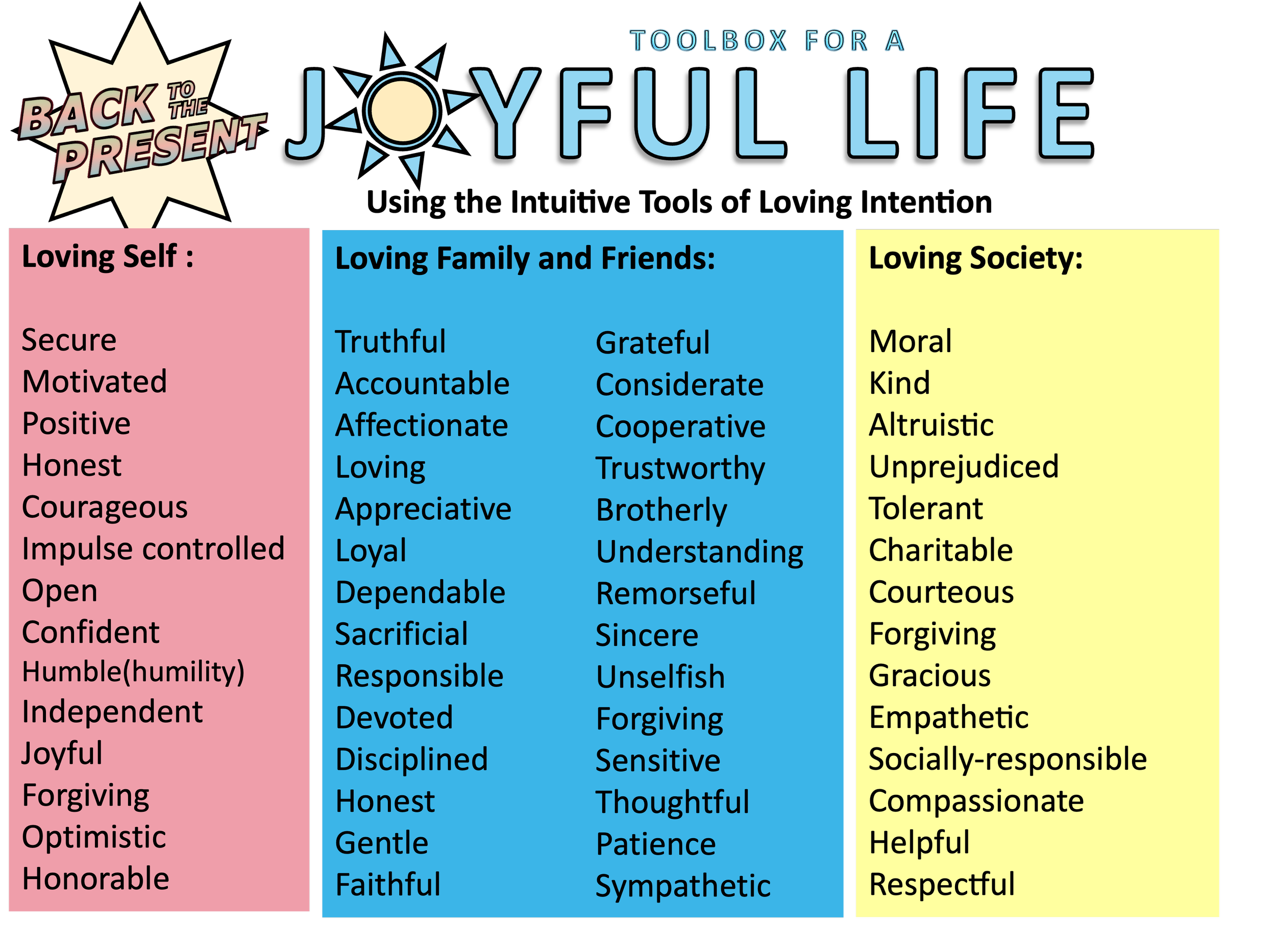
Self: Embracing qualities like being secure, motivated, and positive helps us stay grounded and confident.
Family and Friends: Being truthful, responsible, and caring strengthens your relationships and makes them more meaningful.
Society: Practicing kindness, altruism, and tolerance promotes a compassionate and supportive community.
Example: Imagine your sibling is annoying you at home. Your first instinct might be to snap at them, but instead, you choose to act with loving intention. You take a deep breath and respond calmly. This not only keeps the peace but also makes you feel better because you didn’t let your emotions take over.
Question: Think of a time when you reacted impulsively and later regretted it. How might acting with loving intention have changed the outcome? What can you do next time to respond more mindfully?
Making Decisions with Loving Intention
Making decisions with loving intention helps us be the best versions of ourselves, free from anxiety. These tools are built into our subconscious and are always available to us, they are intuitive. We all want to feel secure, motivated, positive, and confident about ourselves. When we feel this way, we are less likely to be anxious and distracted. Understanding this is key to living mindfully, as it aligns our decisions with our core values and promotes a sense of inner peace and fulfillment.
This approach keeps our mind clear and focused, helping us stay mindful and present. Loving intention protects us from negative emotions, behaviors, or responses, allowing us to fully enjoy each moment.
By embracing presence and living in the moment, guided by the Mindfulness Mantra and loving intention, you can live with more productivity, peace, and purpose. This book will give you the tools, insights, and practices you need to cultivate and maintain presence, leading to a more mindful and meaningful life.
Example: Let’s say you’re deciding whether to join a new club at school. Part of you wants to try something new, but you’re also worried about fitting in or being too busy. By making this decision with loving intention, you think about how joining the club might help you grow, meet new people, and add something positive to your life.
Question: Next time you have a decision to make, ask yourself: "How can I make this choice with loving intention?" How does this way of thinking affect your decision?
Visual Representation of the Mindfulness Model
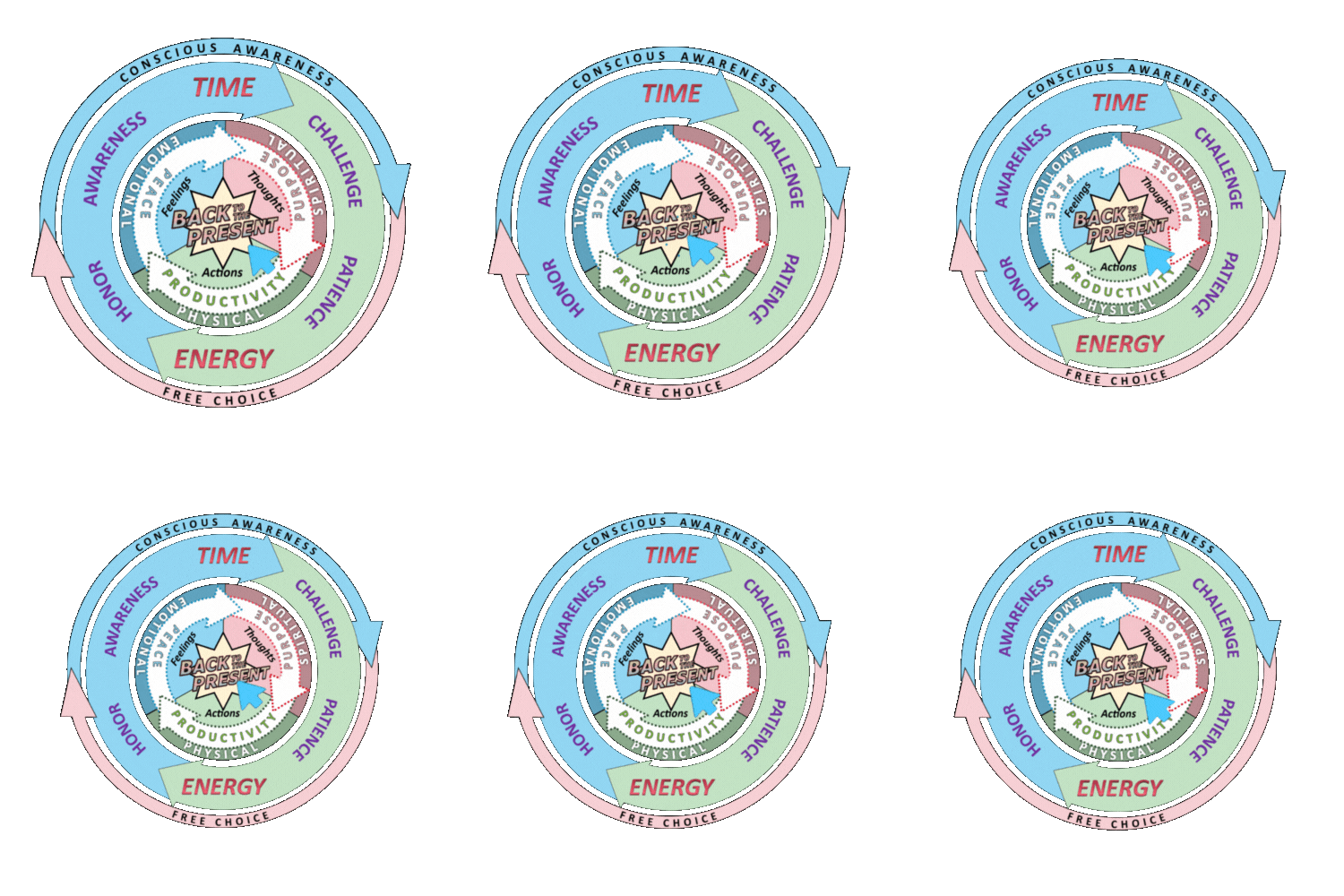
To better understand the intricate connections and principles within this mindfulness framework, refer to the following visual representation of the model:
This model, while complicated at first glance, encapsulates the Critical Understandings and principles that guide mindfulness practice, emphasizing the importance of conscious awareness and free choice, efficient use of time and energy, and the balance of physical, emotional, and spiritual well-being. The diagram serves as a comprehensive map for navigating the journey of mindfulness and self-awareness, highlighting the interconnectedness of our Unique Abilities, Gifts, Obligations, Agreements, and Manifestations in fostering a mindful and present life.
Critical Understandings to be Covered in This Article
This book will explore six fundamental concepts that form the foundation of living with mindfulness and presence. These Critical Understandings provide a comprehensive framework for integrating mindfulness into everyday life, enhancing our overall well-being, and fostering deeper connections with ourselves and others.
1. Limited Resources: Time and Energy
Time and energy are finite resources that we must use wisely. Understanding their limited nature helps us prioritize our actions, feelings, and thoughts. By making intentional choices about how to spend our time and energy, we can align our daily activities with our goals and values, ensuring that we live more meaningful and fulfilling lives.
Example: Think about how you spend your time after school. Maybe you start with homework but then get distracted by social media. Before you know it, hours have passed, and you’re stressed because you didn’t get much done. Recognizing time and energy as Limited Resources can help you prioritize what’s important and make better use of your day.
Question: Take a look at how you spent your time today. Did you use it in a way that aligns with your goals? What could you do differently tomorrow to better manage your time and energy?
2. Unique Abilities: Conscious Awareness and Free Choice
Our Unique Abilities of conscious awareness and free choice set us apart from other beings. Conscious awareness involves a deep understanding of our physical actions, emotional feelings, and spiritual thoughts. Free choice empowers us to make intentional decisions about how we use our time and energy, allowing us to shape our lives according to our desires and values.
3. Our Three Gifts: Physical, Emotional, and Spiritual
We are endowed with three fundamental Gifts: physical, emotional, and spiritual. These gifts enable us to experience life in its fullness. By recognizing and honoring these Gifts, we can develop a deeper appreciation for ourselves and others. Utilizing these gifts to their fullest potential helps us live more balanced and harmonious lives.
4. Manifestations: Actions, Feelings, and Thoughts
Our actions, feelings, and thoughts are Manifestations of our inner selves. They reflect our state of mind and influence our interactions with the world. By cultivating mindfulness, we can become more aware of these Manifestations and ensure they align with our values and intentions, leading to more positive and meaningful experiences.
5. Agreements: Productivity, Peace, and Purpose
Living with presence involves making Agreements with ourselves to be productive, peaceful, and purposeful. These Agreements guide our actions and help us maintain balance in our lives. Productivity ensures that we use our time and energy effectively, peace fosters inner calm and emotional stability, and purpose provides a sense of direction and fulfillment.
6. Obligations: Awareness, Challenge, Patience, and Honor
We have obligations to ourselves and others that support our journey toward mindfulness and presence. These obligations include:
Awareness: Continuously being mindful of what we are doing, feeling, and thinking.
Challenge: Willingly confronting and overcoming obstacles to personal growth by choosing what you would like to do, feel, or think next.
Patience: Exercising patience as we learn to harness our physical, emotional, and spiritual gifts.
Honor: Respecting and valuing our unique Gifts and the Gifts of others, minimizing suffering and distractions from the present moment.
By understanding and integrating these Six Critical Understandings, we can cultivate a deeper sense of presence and mindfulness, leading to a richer, more fulfilling life. This book aims to provide practical insights and tools to help you incorporate these understandings into your daily routine, enhancing your overall well-being and fostering a greater connection to the present moment.