Creative Evolution in Humanity

Creative Evolution in humans represents an advanced stage of evolution where individuals actively shape their evolutionary future through conscious decision-making, particularly in the selection of reproductive partners. This process involves choosing mates based on a combination of intellectual and intuitive attributes, which are then passed on to future generations. Unlike traditional forms of evolution driven primarily by environmental pressures or genetic mutations, creative evolution in humans incorporates the element of free choice, allowing individuals to influence the genetic and cultural trajectory of their descendants intentionally.

How it Works
Conscious Partner Selection
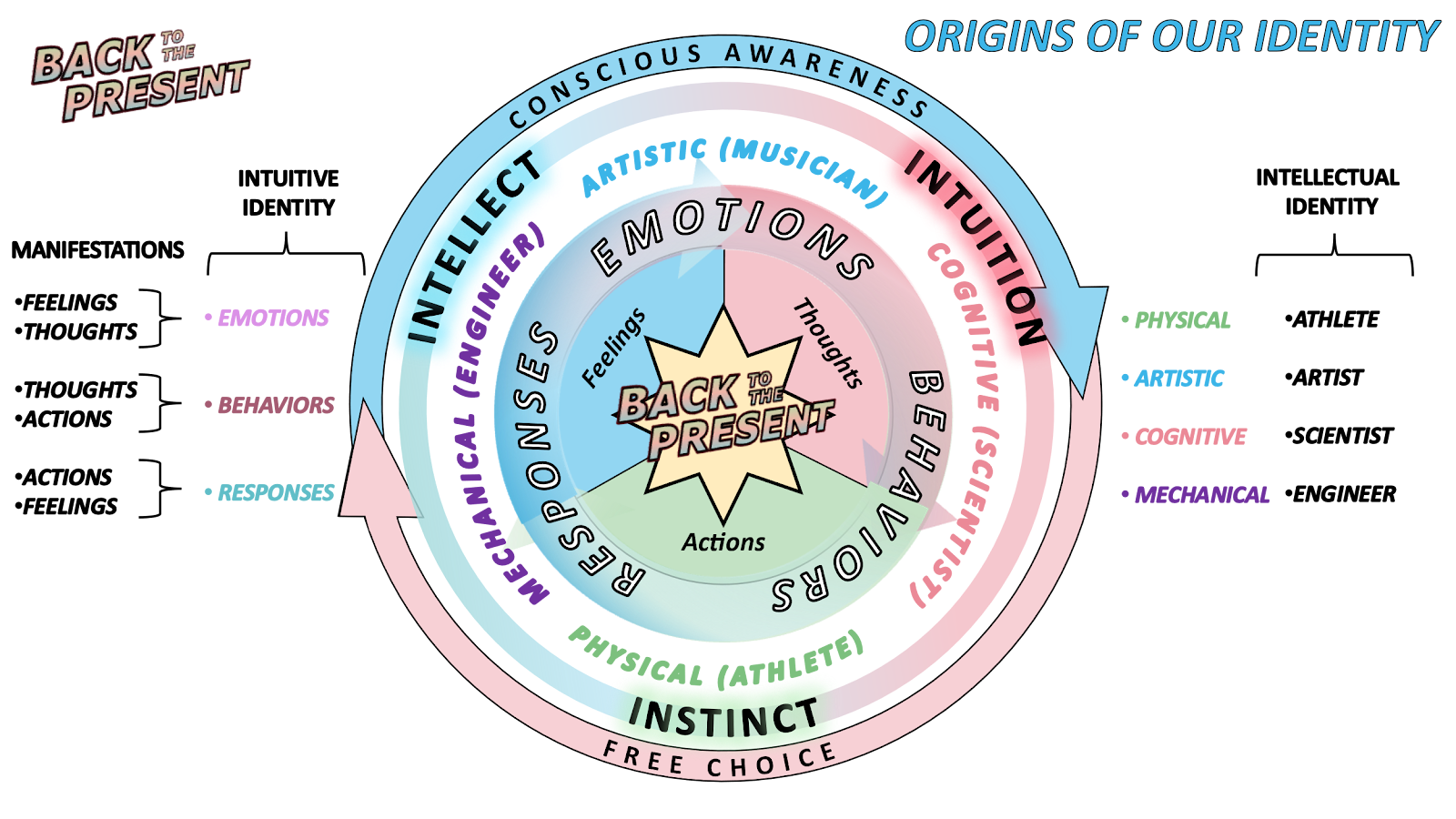
In human societies, partner selection is influenced by a complex interplay of factors that go far beyond mere survival needs. Individuals often choose mates based on a combination of intellectual and intuitive knowledge, seeking traits that align with their own values, desires, and aspirations. This conscious selection process means that certain traits are consistently favored, leading to their increased prevalence in the population over time shaping our Identity (Figure 1-Human Identity).
Intellectual Knowledge Attributes:
Physical Attributes: People may select partners based on physical traits such as health, strength, endurance, dexterity, or attractiveness, which are often seen as indicators of good genes and reproductive fitness.
Artistic Abilities: Creativity and artistic expression are also valued in partner selection. Individuals who demonstrate artistic talents, such as in music, visual arts, or literature, may be chosen for their ability to enrich life with beauty and innovation.
Cognitive Abilities: Intelligence and problem-solving skills are highly prized attributes. A partner’s ability to think critically, learn quickly, and apply knowledge effectively can be a significant factor in mate selection, as these traits contribute to both personal and familial success.
Mechanical Skills: Practical skills, such as the ability to build, repair, or navigate complex systems, are also important. These attributes reflect a partner’s capacity to manage physical challenges and contribute to the household or community in tangible ways.
Intuitive Knowledge Attributes:
Social Intelligence: Social intelligence plays a crucial role in conscious partner selection by enabling individuals to navigate social environments and build meaningful relationships through effective communication. This includes the ability to read and use facial expressions, body language, and vocal cues, as well as linguistic prowess in adapting language to different contexts. Socially intelligent individuals are skilled in managing relationships making them attractive partners. As these traits are consistently valued in mate selection, they can influence the evolution of human communication and social structures, leading to a society where communication skills are increasingly central to success and well-being.
Nurturing Abilities: The capacity to care for and nurture others, particularly children, is a vital consideration in partner selection. Traits such as kindness, patience, and the ability to provide emotional support are highly valued, especially in the context of family life. What sets humans apart is their unique willingness to knowingly sacrifice their time and energy to help those they love become the best they can be—physically, emotionally, and spiritually. This selfless dedication to the well-being and growth of others is a defining aspect of nurturing abilities and plays a crucial role in building strong, supportive relationships that benefit not only individuals but entire families and communities.
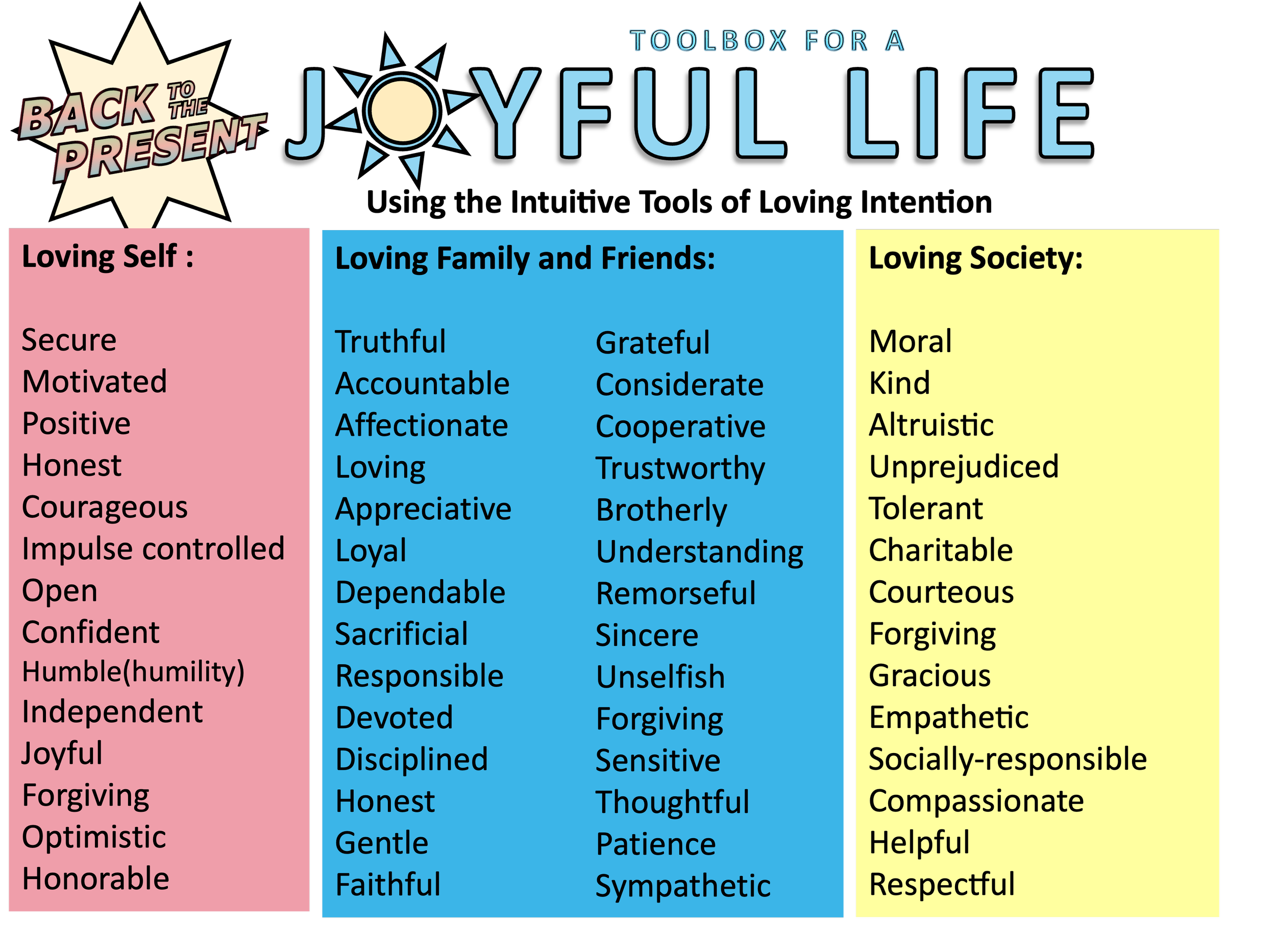
Spiritual Alignment: Humans possess a unique ability to engage in Spiritual Alignment—the capacity to have faith not only in oneself but also in the collective intuitive understanding shared with others. This faith allows us to tap into a deeper connection with the world around us and with each other, fostering a sense of unity and purpose. Through this intuitive attribute we access the Tools of Loving Intention—attributes such as kindness, honesty, empathy, and cooperation (Figure 2-Toolbox for a Joyful Life). These tools enable us to work together in a conscious and deliberate effort to improve not only ourselves but also our relationships, communities, and society as a whole.
By having faith in this collective intuitive understanding, we can harness these tools to create positive change and growth. Spiritual Alignment empowers us to make decisions that are aligned with our highest values and aspirations. This alignment with loving intentions allows us to continually strive towards a more joyful and harmonious existence, both individually and collectively.
Emotional Intelligence: Our emotional intuitive attribute, provides us to display an exceptional degree of empathy. This becomes essential in selecting a partner who embodies loving intention. Empathy allows individuals to deeply understand and respond to their partner's emotional needs, wants, and desires fostering a relationship built on mutual respect, trust, and compassion. In a partnership grounded in emotional intelligence, both individuals prioritize each other's emotional well-being, ensuring open communication and a strong, resilient bond. This empathetic connection is key to creating a loving and supportive relationship that can thrive through both good times and challenges.
Impact on Human Evolution
Over generations, the consistent selection of mates based on these intellectual and intuitive attributes can significantly shape the human gene pool. For example, if a society consistently values cognitive intellectual abilities and social intuitive intelligence, there may be a gradual increase in the prevalence of genes associated with these traits. Similarly, attributes like emotional intelligence, nurturing abilities, and spiritual alignment could become more widespread, gradually shaping the characteristics of future generations.
Long-Term Impact:
Shaping the Future of Humanity: The conscious choices humans make in partner selection today have the potential to influence the future course of human evolution. As certain intellectual and intuitive traits are consistently favored, they become more prevalent, potentially leading to significant shifts in the characteristics of the population. This creative evolutionary process could enhance human capacities such as empathy, creativity, problem-solving, and social cohesion, while also shaping the cultural and social fabric of future generations.