Emotional States of Being
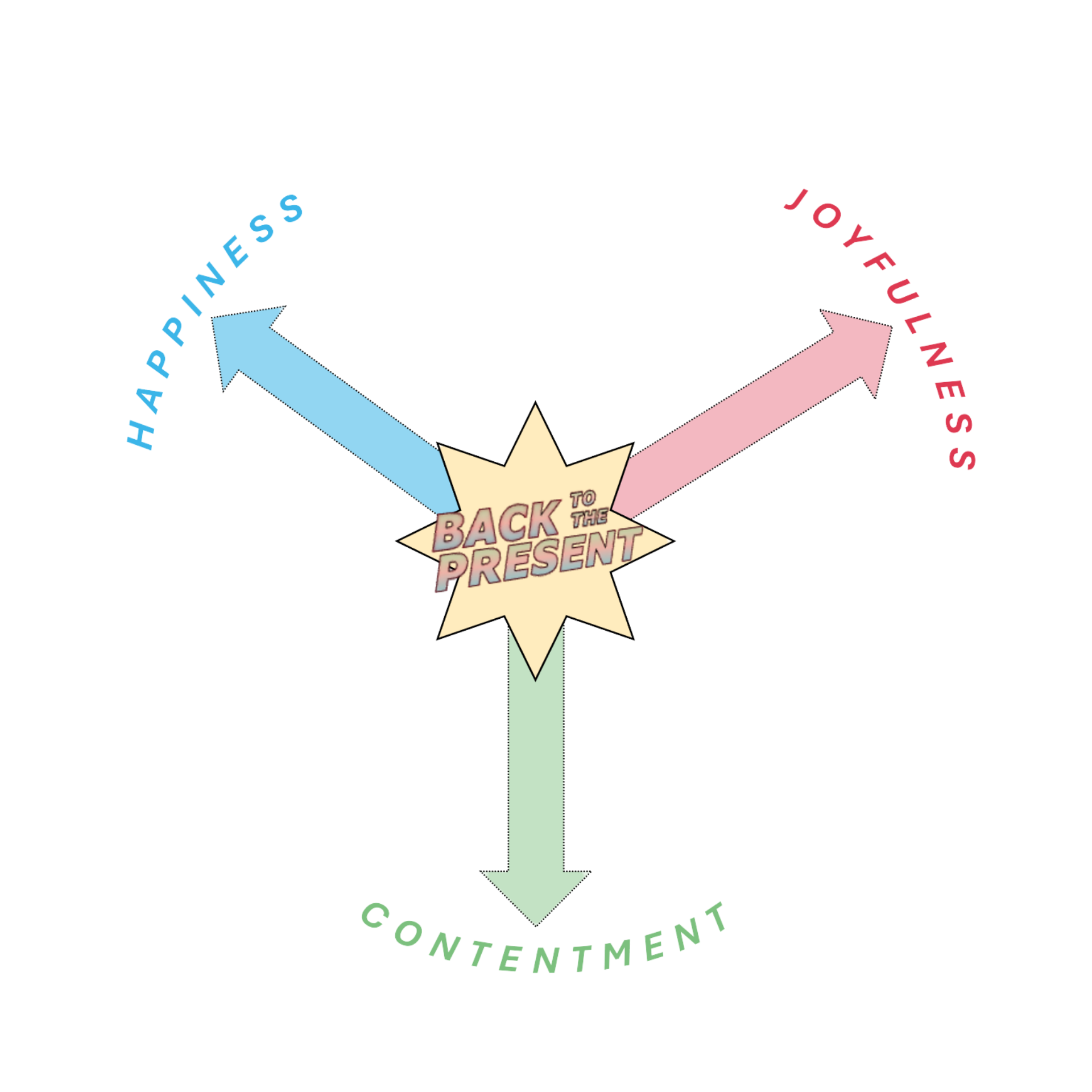
Figure 1-States of Emotional Well-Being-Contentment, Happiness, and Joyfulness
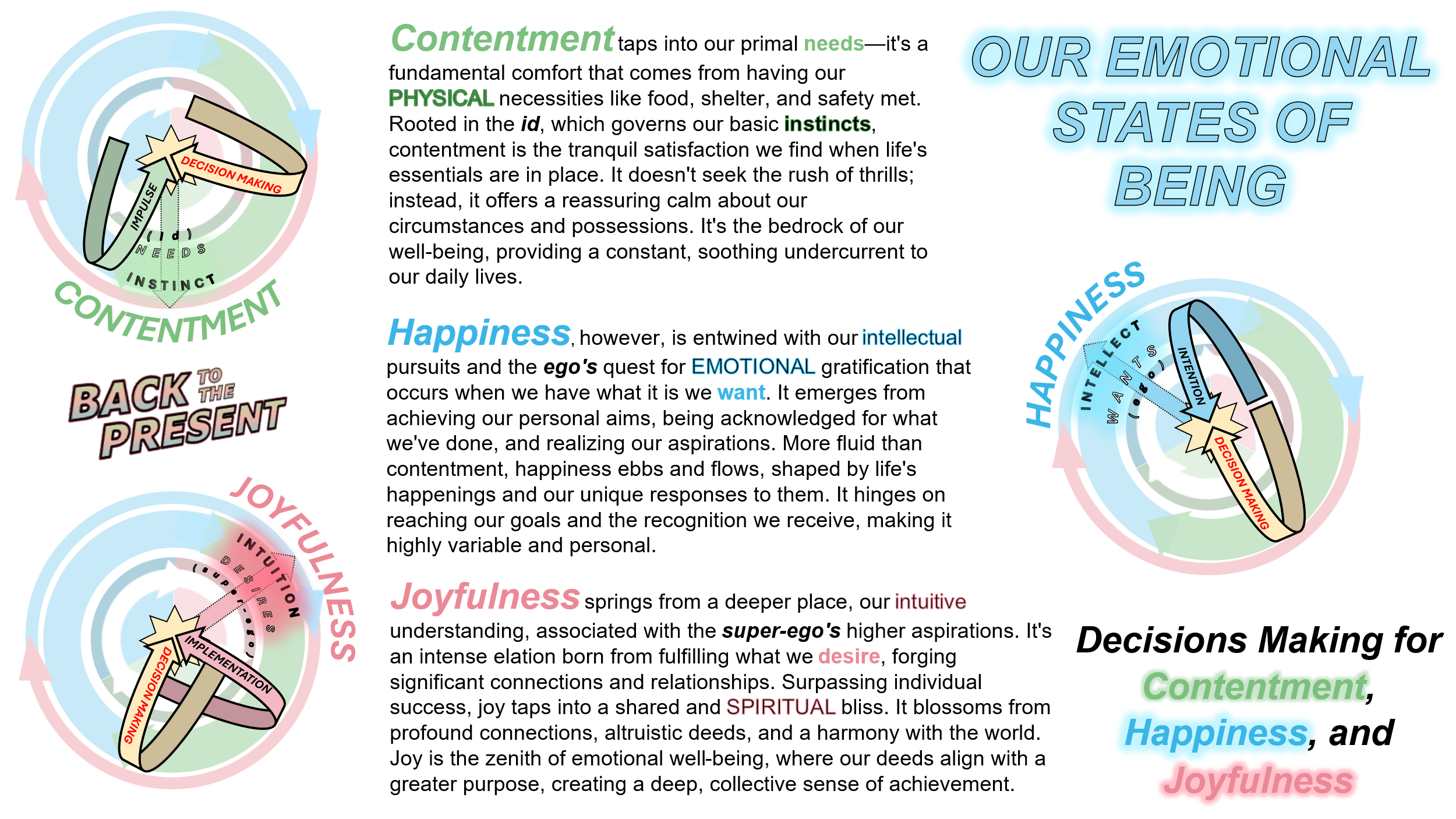
As we migrate through life, we typically attempt to minimize the stress we experience. There are three Emotional States of Being known to humankind that advance upon the simple alternative animals feel when stressed (Figure 1-States of Emotional Well-Being-Contentment, Happiness, and Joyfulness). These advancements motivate a great deal of the human decision-making process. These three Emotional States of Being, contentment, happiness, and joyfulness are provided by the Satisfactions we experience when we have what it is we need, want, and desire respectfully.

Contentment
Contentment is closely tied to our instinctual knowledge. It's a fundamental State of Emotional Well-Being, often linked to the fulfillment of our basic needs like food, shelter, and safety—the domain of the id. When our instinctualneeds are met, we feel a sense of comfort and stability, i.e. contentment. When those same needs are unmet, we are stressed. Contentment does not demand the highs of elation; it's a comforting sense of being at ease with what we have and where we are in life. It is the foundation of our emotional well-being, serving to oppose the force we feel when we are under stress. Alternating, the autonomic nervous systems parasympathetic response fires when content (the rest, relax, digest, reproduce state) versus the sympathetic divisions (flight, fight, or freeze) response when stressed. Wild animals toggle between contentment and stress, unaware of any greater
Happiness
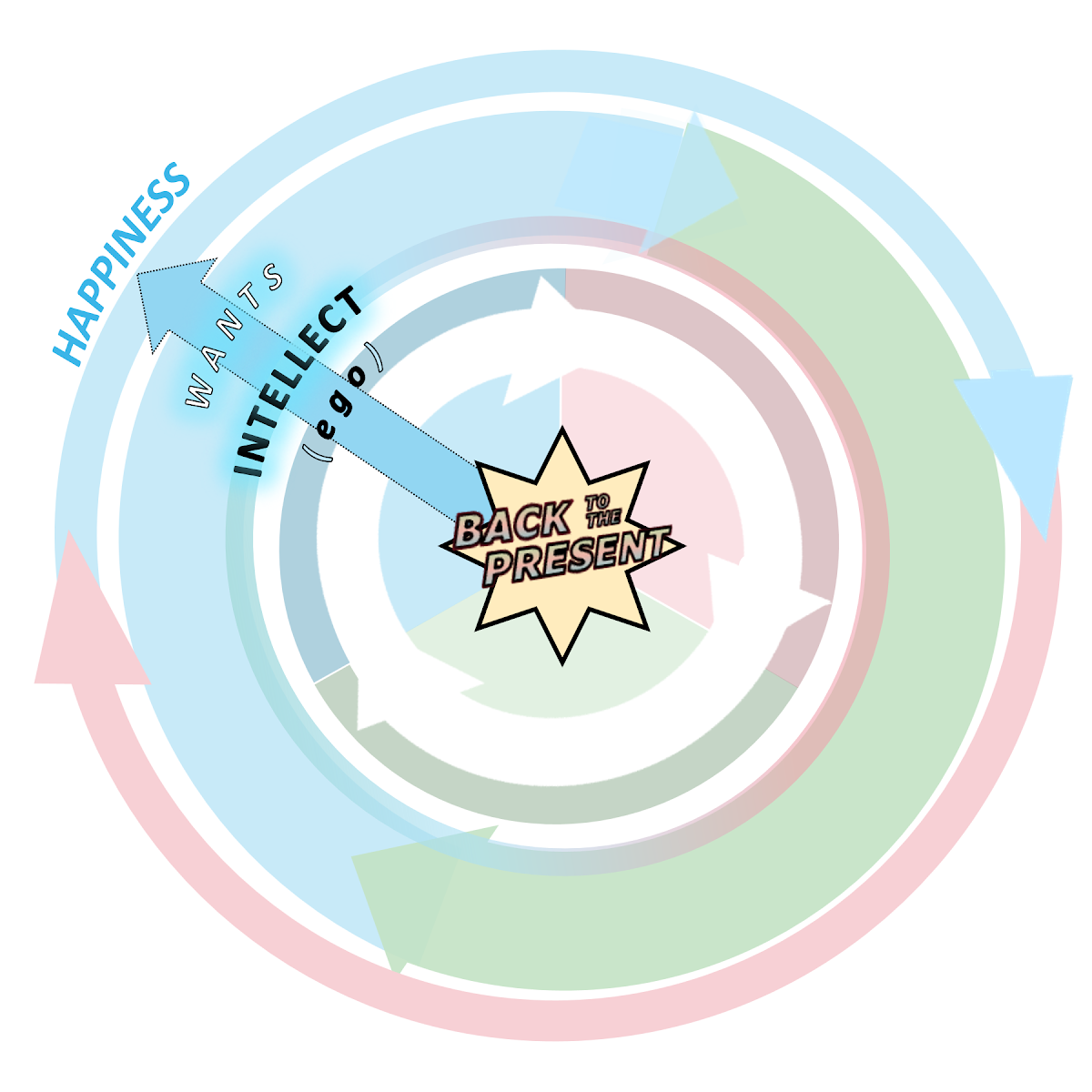
Happiness connects with our intellectual knowledge, relating to the ego's ability to seek and attain what we want. This state is often fueled by our personal ambitions, acquisitions, accomplishments, and the recognition of our efforts with acknowledgement. It's often driven by our personal goals, achievements, and the recognition of our efforts.
Happiness can be more individual, dynamic, and variable than contentment, influenced by external factors and thought processes. It's the feelings and thoughts that surface when we solve a problem, reach a goal, or are acknowledged by others. While contentment is about acceptance, happiness often involves a sense of accomplishment and the success of our personal and professional pursuits.
Joyfulness
Joyfulness, in contrast, intertwines with our intuitive knowledge, belonging to the super-ego's domain. It's an intense feeling of elation that emerges from fulfilling our deeper desires, often linked to meaningful connections and relationships. This State of Emotional Well-Being is carried with you when in the presence of others, offering loving intention to all whom you meet. Joyfulness goes beyond personal achievements, tapping into a sense of collective or spiritual pleasure.
It's what we feel from strong bonds, selfless acts, and being in harmony with our surroundings. Joy represents the pinnacle of emotional Satisfaction, where our actions resonate with a broader purpose, offering a profound, often shared, sense of gratification.
Contentment
〰️
Joyfulness
〰️
Happiness
Contentment 〰️ Joyfulness 〰️ Happiness
Contentment
〰️
Joyfulness
〰️
Happiness
Contentment 〰️ Joyfulness 〰️ Happiness
To visualize these components together: (Figure 5-Emotional States of Being, Satisfactions, Sources of Knowledge, and Elements of Our Psyche):