
The Power of Self-Awareness
An Acknowledgment
Before we dive in, let’s acknowledge something fundamental about human nature:
Every person has the ability to embody the Tools of Loving Intention—like patience, empathy, honesty, and forgiveness—because these qualities are innate within us (Figure 1-Toolbox for a Joyful Life).
If we are honest with ourselves, we want to feel aligned with these qualities, who wouldn’t?
When we embody them fully, our consciousness remains clear, free from anxiety, regret, and karmic (emotional) burdens—allowing us to be fully present and mindful.
And if we lived this way—choosing patience, respect, and understanding—wouldn’t people naturally gravitate toward us?

Figure 1-Toolbox for a Joyful Life
Yet, despite this truth, we often react impulsively, letting our emotions take control, judging others unfairly, and distancing ourselves from the joy of meaningful relationships. Why? Because self-awareness takes effort—it requires a conscious effort to be aware of what you are doing, feeling, and thinking and the understanding of how our actions, feelings, and thoughts impact others and the world around us.
Evan and the Frustration of Assumptions
Evan tapped his fingers on his desk, glancing at the clock. His coworker, James, had missed another deadline, and now Evan was behind on his own work.
"Why is he always like this? Doesn’t he care?"
His irritation grew as he replayed past frustrations—James taking long breaks, being slow to respond to emails. The more he thought about it, the angrier he became.
When James finally arrived, smiling casually, Evan’s frustration spilled out. “Dude, I don’t understand how you don’t care about deadlines.”
James’ face fell. “I do care. My mom’s been in the hospital, and I’ve been going back and forth all week.”
Evan felt a wave of shame wash over him. He had been so focused on his own expectations—his wants—that he never considered James’ reality. His frustration wasn’t just about deadlines; it was about his assumptions, which led to unnecessary judgment.
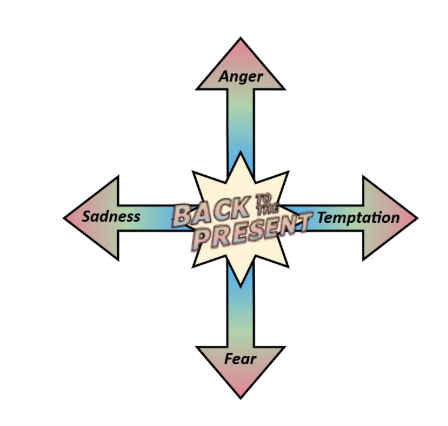
Instead of reacting with patience or curiosity, he had acted F.A.S.T., letting frustration drive his response. And now, the guilt of his impulsive reaction weighed on him (Figure 2-F.A.S.T. Emotions).
Reflective Question: When have you reacted strongly to someone’s behavior, only to later realize you didn’t have the full picture?
Mindfulness Exercise: The Pause & Ask Method
Next time you feel frustration rising toward someone:
Pause. Before reacting, take a deep breath.
Ask yourself:
Am I assuming the worst?
What else could be happening in their life?
How would I want someone to respond to me if the roles were reversed?
Respond with curiosity. Instead of making a statement, ask a question:
“Hey, is everything okay? I’ve noticed you’ve been a little off lately.”
By making space for understanding, we shift from judgment to compassion—freeing ourselves from unnecessary frustration.
Navigating Difficult Relationships: Ava and Her Sister
Ava loved her sister, Mia, but their relationship was complicated. Mia was blunt, often making comments that felt hurtful.
"She never thinks before she speaks," Ava thought as she fumed over Mia’s latest remark.
She considered cutting off contact—but deep down, she didn’t want to lose the relationship. She just didn’t want to feel this way every time they talked.
Through mindfulness, Ava realized something: She couldn’t change Mia’s personality, but she could control her own emotional boundaries. Instead of expecting Mia to change, she could adjust her expectations, knowing that Mia’s bluntness wasn’t meant to be taken personally nor was it meant to be cruel—it was just her way of communicating.
She also recognized that she had the right to set boundaries. She didn’t have to engage in every conversation that drained her.
Reflective Question: How do you balance maintaining relationships while protecting your own emotional well-being?
Mindfulness Exercise: The Relationship Audit
List 3 people in your life who often trigger frustration or disappointment.
For each person, ask yourself:
Do I need to adjust my expectations of them?
Are there boundaries I need to set for my emotional well-being?
Am I allowing past resentment to cloud my judgment?
Decide on an action step for each relationship.
Example: If someone constantly interrupts you, calmly say, “I’d love to finish my thought before you respond.”
Setting boundaries is not shutting people out—it’s allowing yourself the peace of knowing you control your energy.
The Weight of Holding Onto Resentment
Holding onto resentment is like carrying a heavy backpack—you may not notice it at first, but over time, it drains you.
Imagine being frustrated with a partner for being late. Your mind replays the situation, making you angrier. But what if you took a step back?
Maybe your frustration isn’t just about today—it’s about past experiences.
Maybe your own need for punctuality is influenced by childhood experiences.
Maybe their lateness wasn’t intentional at all.
Forgiveness doesn’t mean excusing behavior—it means freeing yourself from carrying unnecessary emotional weight.
Reflective Question: How can you examine your own contributions to conflict before reacting?
Mindfulness Exercise: The Release Ritual
Write down one past situation that still lingers in your mind.
Break it down:
What emotions are still attached to this situation?
Are those emotions serving me, or weighing me down?
Let it go:
Burn or rip the paper as a symbolic release.
Say out loud: "I choose to free myself from this burden."
This simple exercise can help shift your energy away from the past and back into the present.
Key Takeaways & Action Points
Cultivate Self-Awareness: Pay attention to how your actions, feelings, and thoughts impact others.
Action: Practice the Pause & Ask Method next time you feel frustration rising.
Set Boundaries: Decide how much time and energy you want to invest in relationships that challenge you.
Action: Complete the Relationship Audit and establish at least one new boundary.
Practice Forgiveness: Let go of past burdens that weigh you down.
Action: Try the Release Ritual for a lingering resentment you’re holding onto.
Be Present: Use mindfulness to manage emotions before they cloud your judgment.
Action: Start each morning with this question: What is one way I can embody patience, empathy, or kindness today?
By implementing these small but powerful practices, you’ll not only deepen your self-awareness but also foster healthier relationships—freeing yourself from unnecessary suffering and embracing a more joyful and peaceful life.