
Understanding the Cost of Acting F.A.S.T.
Why Our Obligations Matter?
The Story of Two Paths
Alex and Jordan, two college students, found themselves facing an unexpected conflict. They had been best friends since freshman year, but a miscommunication had driven a wedge between them. A mutual friend told Alex that Jordan had been speaking negatively behind their back. Overcome with anger and hurt, Alex hastily composed a long, furious text message, ready to send it without a second thought.
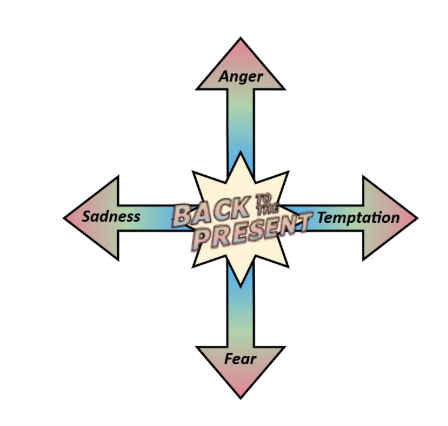
Jordan, however, responded differently. She, too, heard about the rumor but chose not to react F.A.S.T. (with fear, anger, sadness, opt temptation) (Figure 1-F.A.S.T. Emotions). Instead, she took a deep breath and considered whether her emotions were influencing her judgment.
Jordan knew her emotions we there to help her understand how she wanted to feel when she was done making the right decision. Reflecting on their years of friendship, she decided to meet Alex in person to clarify the situation—ensuring she responded with awareness, challenge, patience, and honor (Figure 2-Obligations).
How Jordan Applied the Obligations
Awareness – Jordan recognized the emotions that arose upon hearing the rumor. She acknowledged her feelings of hurt and frustration but also realized that reacting in anger would not align with the person she wanted to be. She became aware that her feelings and thoughts influenced her actions and chose to step back and assess the situation before responding harshly.
Challenge – Instead of accepting the rumor at face value, Jordan challenged her assumptions. She questioned whether the information was accurate, whether it was worth sacrificing a meaningful friendship over, and how she could approach the situation in a way that aligned with her values. She knew that acting impulsively on anger would not lead to a productive resolution. She worked hard to be mindful of how she wanted to feel and think when she was done making her decision. She knew she no longer wanted to be angry.
Patience – Jordan exercised patience by resisting the urge to react immediately. She gave herself time to process her emotions and thoughtfully consider how to address the conflict. When she met with Alex, she approached the conversation with honesty, accountability, consideration, and impulse control—demonstrating patience in action.
Honor – Jordan honored her friendship and her own integrity by choosing a response rooted in loving intention. Aligning her actions and feelings with an outcome that would be beneficial for her relationship with Jordon. She accessed the tools of empathy, communication, sacrifice, and faith, which allowed her to remain calm and open-minded during the discussion. Instead of responding with hostility, she set her intention to resolve the misunderstanding with care and understanding.
The Consequences of Acting F.A.S.T.
Acting on F.A.S.T. emotions (fear, anger, sadness, or temptation) often create suffering, not only for the individual being impulsive but also for those impacted by the decision. When we make decisions impulsively:
We fail to use the intuitive attributes we have been provided to help us make decisions (Figure 3-Intuitive Attributes). These are how the tools of loving intention—empathy, communication, sacrifice, and faith—are implemented (Figure 4-Toolbox for a Joyful Life)
When we choose not to use these tools appropriately, we create a karmic burden for ourselves. Our subconscious mind knows our capabilities and that the tools of loving intention are innate. This leads to feelings of anxiety or guilt.
We waste our Limited Resources (time and energy)—dwelling on past mistakes or fearing future consequences instead of focusing on the present.
The Outcome
Alex’s impulsive response only escalated the conflict. His angry words deepened the misunderstanding, making it more difficult for Jordan to explain the truth. Acting on assumptions rather than thoughtful reflection, he allowed his emotions to take control, ignoring the intuitive tools of loving intention. As a result, Alex created a karmic burden for himself—an internal weight of anxiety and regret that distracted him from being mindful and self-aware.
The consequences were immediate. Alex found himself consumed by anxiety, worrying about the future perception of his actions—"What if I ruined our friendship?" "What if she never forgives me?" He also experienced past burdens, replaying the moment in his mind with regret, asking himself, "Why did I react that way?" He became overwhelmed by even the simplest of choices (complexity of choice) because of his obsession. His behavior upset Jordan, leading to relationship difficulties characterized by frustration and disappointment. And finally, he faced a lack of love of self, feeling guilty because deep down, he knew he could have handled the situation better. Their friendship suffered as a result—until Jordan decided to take a different approach.
In contrast, Jordan’s choice to meet in person and listen with patience led to a different outcome. As they talked, the truth emerged: the rumor had been exaggerated. Because she had approached the situation with mindfulness, she and Alex were able to restore trust and strengthen their friendship.
By using the tools of loving intention, Jordan earned karmic merit rather than accumulating karmic burden. But what does this mean?
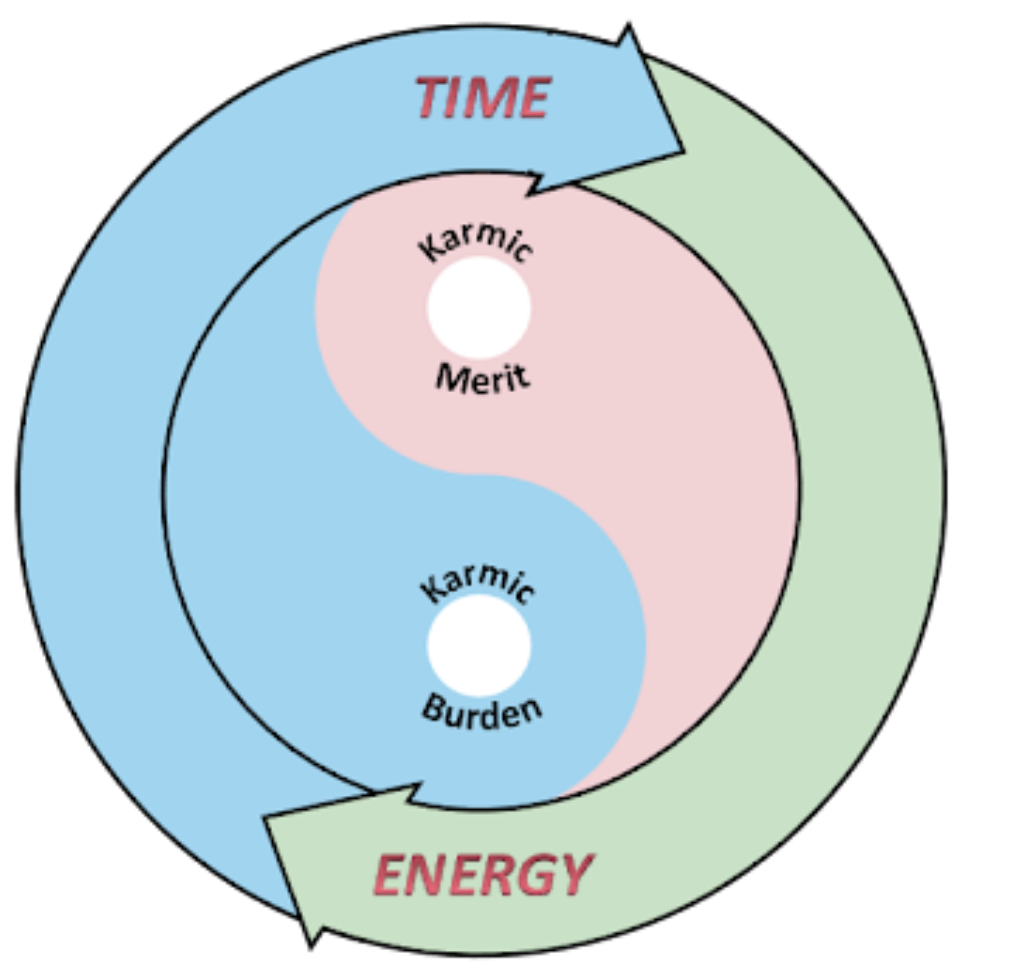
Karmic Merit vs. Karmic Burden
Karmic merit is earned when we use loving intention through our intuitive attributes to communicate, empathize, sacrifice, and have faith in attempt to make good decisions. Our Obligations help us be accountable, helping us to handle conflict with grace. We can make decisions that support both ourselves and others. This merit clears our conscience and allows us to remain present, focused, and at peace with our choices.
Karmic burden, on the other hand, results from decisions that violate the principles of loving intention. When we act out of anger, fear, sadness, or temptation, we create emotional distress, we compromise loving intention creating the Sources of Anxiety. This burden lingers, affecting our future decisions and often leading to more suffering.
Because Jordan acted with conscious awareness, she left the situation with a clear conscience, knowing she had remained true to her highest self. Her response not only resolved the conflict but also set an example for Alex, encouraging him to approach future conflicts with greater mindfulness.
The Bigger Lesson
Why did one approach lead to suffering while the other led to healing? The difference lay in how each person made their decision—whether they reacted impulsively, driven by fear, anger, sadness, or temptation (F.A.S.T.), or whether they paused, reflected, and responded with loving intention.
Alex’s response, rooted in anger, led to hurt feelings, damaged trust, and regret. Jordan’s mindful choice, guided by the Obligations—awareness, challenge, patience, and honor—turned a confrontation into a conversation, strengthening their relationship.
The Illusion of Happiness vs. The Truth of Joy
Two thousand years ago, if you did not feel positive, optimistic, or motivated, do you think you would have survived? If you weren’t loyal, sacrificial, dependable, or considerate, would your family have thrived? These qualities were essential for human survival, shaping the way we formed communities and relied on one another. Today, however, we often seek happiness by pursuing wants—accomplishment, acknowledgment, or the acquisition of possessions—rather than focusing on the deeper fulfillment that comes from meeting our needs.
This distinction is important. The Satisfaction we feel when our needs are met is different from the fleeting nature of happiness that arises when we get what we want. Wants vary from person to person, and we often chase them without fully considering their long-term impact on ourselves and those around us.
This pursuit of happiness satisfies the ego, but it does little to serve the superego, which strives for improvement not just for the individual, but for the collective good. This is where joy comes in. Unlike happiness, which is momentary, joy is lasting and arises when our actions, feelings, and thoughts align with our true purpose.
Much of our decision-making is shaped by our needs, wants, and desires. As human knowledge and awareness expanded, so did our choices. Our ancestors relied primarily on instinct to meet their needs—food, shelter, and safety—bringing them contentment. However, our ability to share and express emotions, behaviors, and responses fostered cooperation and community, as described in the Toolbox for a Joyful Life.
This intuitive knowledge led to a more collaborative existence, where people worked together and shared intellectual knowledge to enhance both quality and quantity of life. This shift introduced a new Emotional State of Being—happiness—as humanity pursued wants. As intelligence evolved, so did the capacity for conscious decision-making beyond mere survival. However, in modern society, many decisions are driven by individual wants rather than needs, often at the expense of deeper fulfillment.
The pursuit of happiness satisfies the ego, but it does little to serve the superego, which seeks improvement not for the self, but for all. This is where joy comes in. Unlike fleeting happiness, joy is state of mind, existing from within when we fell fulfilled. This joy arises when our actions, feelings, and thoughts align with our true purpose. This allows us to utilize our intuitive attributes through loving intention to make improvements upon all that is.
The Karmic Burden of Poor Choices
When we ignore the Tools of Loving Intention in favor of impulsiveness that often follows our wants, we create a karmic burden that weighs on our consciousness. This burden manifests as the anxiety that comes from:
Future perceptions—anxiety about what might happen as a result of our choice.
Past burdens—regret, remorse, or guilt over past actions.
Relationship difficulties—frustration, disappointment, or anger from those we care about.
Lack of love of self—self-doubt and self-criticism.
Complexity of choice—overwhelm when faced with too many options.
These anxieties distract us from being mindful and present, making it harder to experience joy. The weight of unresolved choices drains our emotional energy, often leading to what I refer to as ‘emotional exhaustion’—a common feature describing depression (Figure 3-Contributors of Anxiety).
How to Break the Cycle: Directing Consciousness Back to the Present
The good news? We can break this cycle by practicing presence, using our Unique Abilities, conscious awareness and free choice. Here’s how:
1. Pause and Bring Awareness to the Moment
Before making a decision, ask:
Am I acting out of fear, anger, sadness, or temptation?
Am I seeking temporary happiness, or am I choosing joy?
How will this decision impact not just myself, but others?
2. Challenge Yourself to Use the Tools of Loving Intention
When facing a difficult decision, remind yourself that you already possess the attributes that allow humanity to utilize the tools of loving intention: challenge yourself, knowingly utilizing the tools of loving intention with empathy, communication, sacrifice, and faith (Figure 9-Limited Resources and the Obligation of Challenge). Ask:
Am I being empathetic to those affected by this decision?
Am I communicating openly and honestly?
Am I willing to sacrifice my time and energy for long-term fulfillment, or am I choosing short-term gratification?
Do I have faith in my ability to choose wisely?
3. Be Patient with Yourself
Growth takes time and energy. We must adhere to the Obligation of patience as we learn to use our Gifts fully (Figure 10-Limited Resources and the Obligation of Patience). Patience allows us to:
Accept mistakes as part of our journey. This is how we learn and add knowledge.
Learn from past decisions rather than dwell on them.
Trust that each choice is an opportunity for growth.
4. Honor Your Gifts and Make Purposeful Decisions
Every decision is an opportunity to use our physical, emotional, and spiritual Gifts (Figure 12-Limited Resources, Gifts, and Obligation of Honor). By honoring these gifts, we:
Make choices that align with purpose.
Conserve our Limited Resources rather than wasting them on distractions.
Stay mindful, present, and engaged in creating a fulfilling life.
Conclusion: Living with Intention and Earning Karmic Merit
For the first two million years of human existence, acting with loving intention was necessary for us to learn for our collective survival. Today, we have countless choices—but with choice comes responsibility. We must:
Recognize the impact of our actions, feelings, and thoughts on others (Figure 13-Gifts and Manifestations).
Choose joy over fleeting happiness.
Utilize our Obligations to act with awareness, challenge, patience, and honor to maximize our physical, emotional, and spiritual Gifts.
When we do this, we clear our consciousness of karmic burden and instead earn karmic merit—aligning our decisions with our higher purpose (Figure 14-Karmic Merit and Karmic Burden). In doing so, we remain present, mindful, and able to experience the joy that life offers.